Systemising Production: How We Build Handmade Slate Water Features That Last for Decades
At first glance, handmade slate water features can look spontaneous — as though each piece was simply picked up from a beach and placed by feel.
In reality, the opposite is true.
Behind every sphere and water table we produce is a carefully developed workshop process that ensures consistency, strength and performance once the feature is in your garden.
No guesswork.
No callbacks.
No expensive regrets.
Why systems matter when you’re investing in natural stone
Handmade doesn’t mean chaotic. A clear process delivers three things that matter:
• Consistent sound and water flow
• Reliable build quality
• Installation that works even in tight access gardens
Because our features are built in ringed sections, even large pieces can pass through a standard garden gate.
How the slate moves through the workshop
Selection at source
Only slabs with the right colour, thickness and natural cleavage come out of the Cornish quarry.
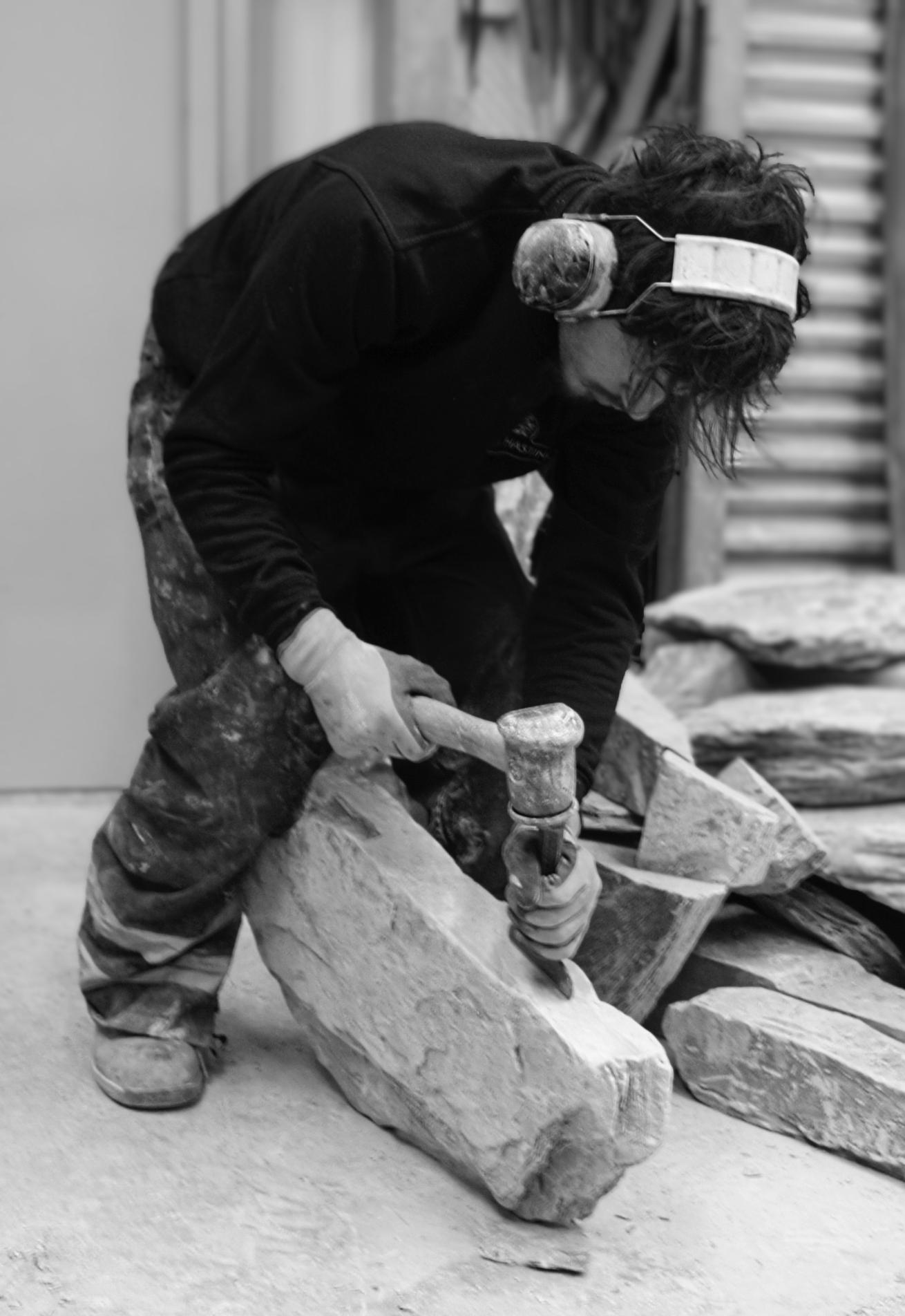
Cutting & splitting
Blocks are sawn and split along natural layers to expose the textured surfaces that create the distinctive water sound.
Shaping
Each piece is given a subtle curve. This isn’t decorative — it helps the water break and move naturally instead of sheeting off the surface.
Grading & sorting
Thicker pieces go towards the centre for strength. Lighter pieces move to the top and base.
Assembly in rings
Large spheres are built in sections that fit together on site. A typical 1 metre sphere contains over 830 individual pieces of slate, all placed by hand.
Natural stone needs flexible systems
Slate is never uniform like cast concrete or resin.
Our process works with the natural layers of the stone rather than forcing it into a mould. The result is a feature that still looks unique — but performs reliably year after year.
Built to become part of the garden
These aren’t seasonal ornaments. They’re designed to weather, soften and improve with age — much like a dry-stone wall.
Many of our earliest installations have now been running for more than a decade with nothing more than occasional pump maintenance.
The result is a water feature that doesn’t just sit in the garden — it becomes part of it.
Please Contact Us for more information.